
Things to know about biological nurturing (or laid back breastfeeding or koala position or straddle hold) and breastfeeding on the move
What about the koala or baby-led or biological nurturing position?
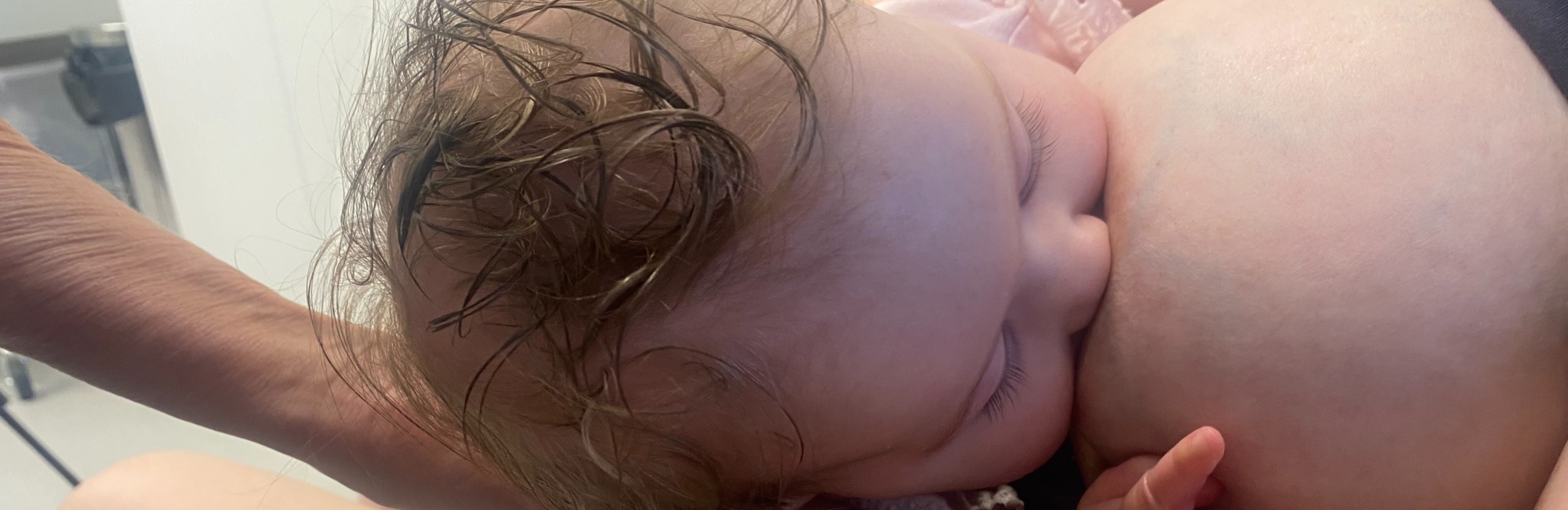
This woman and her baby are happy feeding in a koala position in a breastfeeding chair. Often, breastfeeding chairs with solids arms make it difficult for baby to be in a stable position. Also, in a koala position, the baby straddles one of your thighs. Due to the length of babies, this often works best across the thigh that is opposite to the breast the baby feeds from. It still usually helps to be in the deck-chair position - leaning back will give your lap more length and help the baby remain stable.
Although it's working for this woman, many run into problems when they try this position, which is why I don't suggest it when I'm helping women. The problems include
-
Not enough room in the mother's lap for the length of the baby, so baby is coming on to the breast too high relative to where the breast naturally falls, resulting in nipple pain, which causes nipple pain or baby fussing with feeds and pulling off
-
Baby's head twists or falls off to the side, which results in breast tissue drag
-
Baby's spine is bent back into a banana shape, which results in baby fussing and pulling off
-
Limited capacity to experiment with micromovements since baby's head is in crook of mother's arm and his head pressed against her upper arm.
In the following photos of breastfeeding in a koala or 'baby-led' position, you'll see there is poor spinal alignment - that is, the babies spine, pelvis and head are on a twist. However, the babies were feeding well. But these mothers have a more delicate breast and longer torso. You can see that the little face is deeply buried into the breast, and the baby came on with a symmetrical face-breast bury, just where the breast wants to fall. Even if it seems to be working, a baby with his head turned off to the side like this might pull off or fuss further into the feed, and need to change positions.


Breastfeeding on the move - necessary for a good life with your little one!
Over time women work out how to adapt the principles of a stable breastfeed to wherever they are on the go, though many women find a moderate backwards lean always works best, particularly if the baby is fussing. You can usually adopt a slumped back, deck-chair position without people really noticing, when you're feeding outside the home.
The most important things are to remember the feel of the baby deeply drawing up the breast tissue and to make sure you get that sensation without any discomfort at all, by using micromovements, adjusting whatever you are doing if baby signals that he or she isn't stable at the breast.


This woman is breastfeeding on the move. You will notice that she is sitting quite upright, there is often not much of a landing pad exposed, the baby's spine might have a twist, and the baby's feet may not have much support.
However, they've been laying down the neurological pathways of the gestalt method for quite some time. Now, when they are out, this mother continues to ensure that her baby's lower face is deeply and symmetrically buried into her breast and that he is feeding from the sweet spot, which feels just right on her breast and nipple. She watches to see if he is stable and makes adjustments when he signals that he isn't. Overall, it's working for them - this woman and her baby are having a great time out of the home enjoying a social life, which is what matters. She's painfree and the baby isn't fussing.
As soon as there is any hint of a problem like baby fussing at the breast or nipple discomfort, she knows what to do to deal with it.
Recommended resources
What does the research tell us about approaches to fit and hold currently used for breastfeeding support?